Upcoming Event: Women's Basketball versus Green Bay on November 3, 2026 at 7 p.m.

Women's Basketball
vs Green Bay


11/29/2000 12:00:00 AM | Women's Basketball
Two of the oldest women's basketball records on file at Duke are Joanne Boyle's mark of 75 steals during the 1985 season and Sarah Sullivan's mark of 68 blocked shots in 1983. Duke has had some gifted defensive players come through Cameron Indoor Stadium over the last 15 years, including some cat-quick ball hawks and an All-America center, but no one yet has been able to knock Boyle or Sullivan out of the record book.
Sullivan's rejection marks, which also include 212 career blocks, are likely to endure into the foreseeable future, but Boyle's steals record might as well be considered toast. The way the 2001 Blue Devil edition is playing defense, her name might be erased from the books before the ACC campaign hits midseason.
In getting off to a 7-0 start and rising to No. 3 in the national polls, the Duke women aren't just playing good defense. They are swarming. They are intimidating. In the words of head coach Gail Goestenkors, they are creating tremendous indecision in opposing offenses. In seven games they've already forced 169 turnovers and made 98 steals. Their average of 14 thefts per game thus far is well ahead of the 10 they averaged last season when they set the team record for steals at 361.
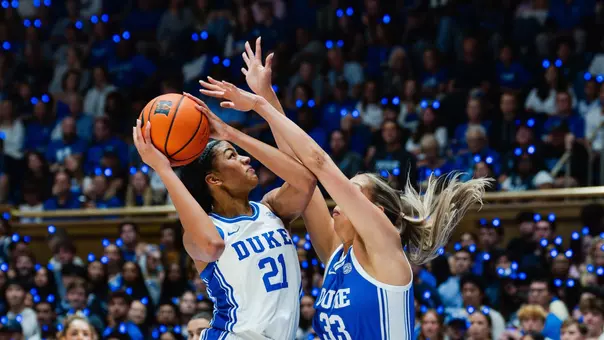
Freshman wonder woman Alana Beard is the primary instigator of Duke's ball-pressure tactics. The 5-foot-11 perimeter presence, who had over 500 career steals in high school, already has 29 in her first seven college games, a rate that would break Boyle's record in mid-January. About the only thing likely to slow her is limited playing time if the Blue Devils continue to romp by over 20 points a game.
"She's a great defensive player," coach Gail Goestenkors says. "She has the longest arms I think I've ever seen, so she gets a lot of tips, which enables other players to get steals. She also has a really good feel for the game. She has the green light to go trap whenever she feels she can go trap, which is something we haven't done in the past. It's usually been a call."
"She's awesome," agrees Boyle, now a Duke assistant coach, "and she'll be even better when she learns to get into the flow of the game instead of trying to pick everybody's pocket in the first three minutes, which has gotten her into early foul trouble so far."
But Duke's defense this year is not built around one player. The Devils' entire team mindset is centered on the defensive end of the court and they are playing it effectively as a unit. Only one of the first seven opponents has been able to shoot better than 38 percent and score more than 70 points on the Devils (No. 9 Penn State, at 41.4 and 87). And keep in mind that the first seven opponents have included three ranked teams and four road games. In winning last weekend's Duke Women's Basketball Classic - which Boyle saw firsthand from the bench and Sullivan viewed from the bleachers as a fan - the Blue Devils put on an astounding defensive display against outmatched Duquesne and Toledo. They held Duquesne to 23 percent shooting in the first half in opening up an insurmountable 49-20 lead, then did even better in the championship game against Toledo by limiting the Rockets to four field goals and 13 points in the first 20 minutes. Goestenkors called that the best defensive half of the young season.
"We put great pressure on the ball," she said. "We were trapping. They like to set screens on the ball and we were trapping that. I thought we just caused them a lot of problems because they couldn't see open players. We were up and in passing lanes.
"I think the way we jumped out on them put them back on their heels a little bit. The type of defense we're playing is hard (to face) because you don't practice against it everyday. It's very difficult, especially the first five minutes of a game, for a team to adjust to the type of pressure they are seeing - the traps, the athleticism."
Duke's defensive style this year marks a change in tactics from the way the Devils played a few years ago, when they vowed to use defensive improvement as their ticket to the top of the conference. Coach G used to have her team play a containment game, but now it's an all-out blitzkrieg.
"Two years ago we didn't trap at all," she said. "We didn't feel like we had the speed or quickness to do that, and we also had a big center in Michele VanGorp and some very small guards so we didn't want to get mismatches. Michele couldn't go out and defend a perimeter player.
"Then last year when we became smaller (after VanGorp graduated), we trapped more in the quarter-court than we had before because we had a little more quickness and we were very similar in size. We would run a switching defense periodically to take teams by surprise.
"Now this year our switching defense is our main defense, it's our bread and butter right now, and we're trapping much more than we ever have. So it's been gradual over the last two years but totally different than what we played a few years ago when it was just a containment defense."
Goestenkors has wanted to play this style of defense since her arrival nine years ago, but first she had to acquire the appropriate personnel.
"When I first came here we pressed fullcourt because I was a rookie coach and I didn't understand that we didn't have the personnel to do that, and we lost a lot of games," she explained.
"I finally figured out that I needed to adjust more to my personnel. Now we're finally getting the personnel in that will enable us to play the type of basketball that I really enjoy coaching and that I think the players enjoy playing. It's just taken awhile."
Goestenkors has the ideal personnel set this year with big guards such as Beard and senior Georgia Schweitzer and versatile forwards in senior Rochelle Parent and freshman Iciss Tillis. Beard can completely disrupt an offense with her coverage of the point guard and traps on the ball, but those other players also must have a feel for the system to rotate, adjust and look for the turnovers that result from the opposition's indecision. "Rochelle is one of the those players who doesn't get much credit, but she is really a stalwart of our defense," Goestenkors said. "She and Georgia really help the freshmen to know where they are supposed to be and when they are supposed to be there. She plays the best defense of anybody on the floor."
"It's just more exciting when you're out there to play, to have the freedom to go trap and get some steals," said Schweitzer. "That's the fun part of basketball, getting steals and running fast breaks."
Schweitzer was named MVP of the Duke Basketball Classic last weekend, a repeat honor for her as the team won its home tourney for the ninth straight year. Beard and freshman Rometra Craig also made the all-tournament team, along with Radford's Kylie Williamson and Toledo's Courtney Risinger.
Both of Duke's opponents came away impressed by what they saw from the home team.
"I've seen enough of them on tape and then yesterday in person, so I pretty much knew what I was going to expect and they didn't really disappoint. They're an awfully good defensive team," noted Toledo coach Mark Ehlen.
Only seven games into a season in which they are utilizing several freshmen and sophomores, the Blue Devils know they still have room to grow. Even on the defensive end, where they have been the most spectacular so far.
The feeling within the program is that even though the numbers and the results have been impressive, additional improvement will be needed to handle more skilled and experienced offensive teams later in the season.
"Taller, more athletic teams would pick us apart right now," explained Boyle. "When you trap the ball, somebody is open and all of our players haven't learned to make the adjustment on that and get the seal. Bigger teams or more athletic teams will see the open players over the trap or dribble out of it. Our kids are so active and so athletic that they are getting their hands on the ball and getting a lot of tips so it looks good right now, but we'll be a lot better when everyone gets up to speed with all the adjustments that need to be made on the traps."
"We're still not where we want to be," admitted Coach G. "We are going to pick it up and go fullcourt more when we have some time to practice. We have just been playing game after game. We're doing things now in the quarter-court that eventually we are going to move out to the fullcourt."