Upcoming Event: Women's Golf versus NCAA Championship on May 22, 2026

Women's Golf
vs NCAA Championship


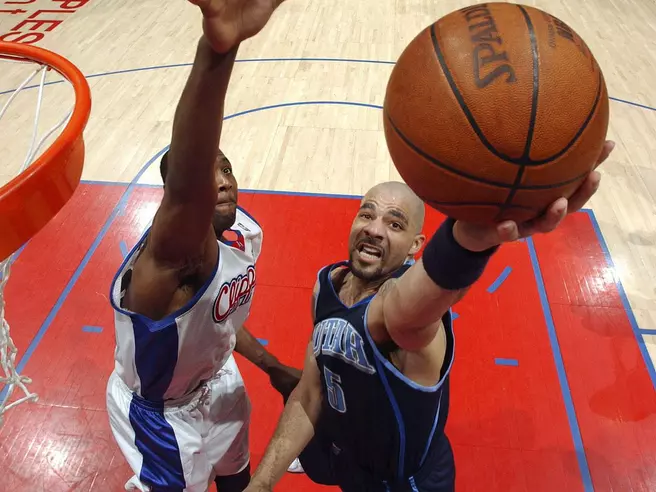
DURHAM, N.C. ? It has been a long, hard road to stardom for NBA forward Carlos Boozer. But after playing a key role on a national championship team at Duke, having to prove himself to the NBA as a player, and battling concerns about his children as he began his life as a father, there’s no doubt Boozer is now one of the elite all-star players in the NBA.
You can see it each week with a look at the statistical leaders in the NBA. There, right along with Kobe Bryant and LeBron James, is Carlos Boozer, averaging near the 25-point mark. At last check, Boozer had scored more field goals than any other player in the league while ranking eighth in scoring, seventh in field goal percentage, sixth in rebounding and second in double-doubles (with 24 in his first 33 games of the year). In the NBA’s efficiency ranking, Boozer stood third behind only James and Dwight Howard.
And you could also see Boozer’s star-power in the press across the nation as outlets such as ESPN.com list him as an MVP candidate for this season.
“He’s emerged as one of the dominant players every night,” cited ESPN.com analyst Kiki Vandeweghe. “He’s become such a force on both ends of the court ? and he’s always been a great rebounder and scorer.”
“I think he’s definitely been an MVP candidate,’’ Jazz teammate Deron Williams said. “A lot of games, he’s put us on his back.”
One example of putting the team on his back came in November when Boozer was selected as the Western Conference player of the month, becoming the franchise’s first player to win the award since Karl Malone in November 2000.
Malone won the award seven times overall and John Stockton won it once in February 1988. Boozer averaged 24.9 points, 10.9 rebounds and shot nearly 58 percent in the month while the Jazz went 11-5 as a team.
He ended the month of December on another high note as he helped to lead the Jazz to a 111-101 victory over the Portland Trailblazers. The win broke the Trailblazers’ string of 13 consecutive wins. Boozer had 19 points and nine rebounds.
He is one of six former Blue Devils on the 2008 NBA All-Star ballot along with Shane Battier (Houston Rockets), Luol Deng (Chicago Bulls), Mike Dunleavy (Indiana Pacers), Grant Hill (Phoenix Suns) and Corey Maggette (Los Angeles Clippers).
A Chip On His Shoulder
After celebrating in Minneapolis with a NCAA title in 2001, and an ACC title in 2002, Boozer’s career in the NBA got off to a rocky start.
He was taken with the 35th pick in the 2002 NBA draft, the sixth pick of the second round, and the second overall pick by the Cleveland Cavaliers, who chose Dajuan Wagner, a guard from Memphis, with their first selection, the sixth overall pick in the draft. Boozer was actually the third Blue Devil selected in the 2002 NBA draft, with Jason Williams going as the second overall pick to the Chicago Bulls and Mike Dunleavy as the third overall pick to the Golden State Warriors.
The sting of being taken so low in the draft has stayed with Boozer. There is talk among the Jazz that Boozer actually has a list of all the players taken before him and plays extra hard in games where he faces one of those players.
“For me, I still wear that chip on my shoulder even though I have had some success in the NBA,” he explained. “I feel like I have to prove myself every night. I have to prove to the general managers and the coaches that passed me over and the players that went ahead of me. I wear that chip proudly; for me, it’s all motivation.”
His rookie year with Cleveland, Boozer played in 81 games, started 54 times and averaged 10 points per game. He was selected to the NBA All-Rookie second team and scored 11 points in the Rookie Challenge during All-Star Weekend.
His second year in the league he began to show people exactly what type of player he was as he played in and started 75 games, averaged a double-double with 15.5 points and 11.4 rebounds, was named Eastern Conference player of the week once and scored 25 points as a second-year player in the Rookie Challenge.
Following that season, Boozer was able to use the fact he was taken in the second round of the draft to his advantage and explore his options with other teams in the league. While the Cavaliers made a pitch to keep Boozer, it wasn’t quite as good of an effort as the Jazz made as they offered him a $68 million, six-year deal, which Boozer signed and headed off to Salt Lake City.
During the 2004-05 season, his first with Utah, he started the first 51 games and averaged 17.8 points, but he missed the last 31 games of the season with a strained right foot. The 2005-06 season didn’t start much better as he missed the first 49 games of the season with a strained left hamstring.
Boozer was still able to play in the final 33 games of the season, starting in the last 19 games and ending as Utah’s second leading scorer with a 16.3 average.
“When I was hurt and wasn’t able to play, that is about the lowest you can get when you are the kind of player that wants to be playing every minute,” said Boozer. “I was able to learn a lot, understand the game better, watch the game from a different perspective, from a coaching standpoint. When you are out so long you critique the game a little differently, you begin to look at the game a little differently and see the game from a different perspective. When I came back it made me so hungry because I had missed so much time. Now I am enjoying the fruits of my hard work.”
No Summers Off
Last season was a breakout season for Boozer as he averaged 20.9 points and 11.7 rebounds and helped lead the Jazz to the Western Conference finals of the NBA playoffs. In 17 playoff games, Boozer averaged 23.5 points per game.
“I told him, like I told a couple of guys, ?Where do you want to be?’” Jazz coach Jerry Sloan said about Boozer following last season. “’I can’t do anything about it. You have to be the guy that puts the work in. You can talk about it. We’ll get you shots. But the rest is all left up to you. You got to to do the work.’”
The words were music to Boozer’s ears. Hard work is exactly what had gotten him to where he was in his career and if hard work would take him to the next level then he knew exactly what he had to do.
“You have to work hard to get better,” said Boozer, who was named to the 2007 NBA All-Star team, but missed the game with an injury. “In this game people are getting better every day and working hard to get better, so if you aren’t working, somebody else is and you are getting behind. I don’t take summers off, I get in the gym. I’m in the gym doing ball drills, shooting drills, rebounding, shooting free throws, everything that will make my team better. I figure if I get better then my team will get better.”
So far this season that hard work has paid off for Boozer and his teammates as he and the Jazz remain in the hunt for Western Conference supremacy and Boozer looks to be in line for another trip to the All-Star game.
“I feel like as a team that we should have some more wins under our belts,” said Boozer, who serves as co-captain of the Jazz. “Individually I feel like I am doing fantastic, but I am so much of a team guy. From my Duke pedigree we learned to be about the team and not about the individual. We have so much talent on this team that we should be one of the top four teams in the West. One of the great things about the NBA is it is such a long season. We want to improve every game and be among the best at the end of the season.”
Master Of The Basics
There is something very basic about the way Boozer plays the game of basketball. He isn’t the flashiest player in the league; his staples are layups, some mid-range jumpers and just a lot of plays from the post.
“I guess I get the ball a lot,’’ Boozer said, jokingly. “I think it says a lot about how hard I’ve worked and all the good stuff about me. But I’m a team guy and I want us to win and whatever it takes to win, that’s what I’m going to do.”
On one three-game road trip Boozer showed his offensive ability as he averaged 30.7 points and made 74.5 percent of his shots.
While his baskets may not be the kind that show up on highlights every night, they are the kind that keep the Jazz in contention in the Western Conference.
“Well, layups don’t look very pretty,’’ Sloan said. “They never have, but we’ve always strived to try to get guys an opportunity where they can get the ball inside. We just happen to have a guy that has the ability to be able to play in the lane, play on the baseline, play out around the top of the key. That’s who he is. It’s important for us to try to get the ball inside and take advantage of some of the skills of the players we have.”
In college Boozer averaged just 14.9 points per game for his career with his best season coming as a junior when he averaged 18.2 points per game. But now in the NBA he can unleash the scoring monster he has always been.
“I have always been a scorer,” he said. “In high school I averaged over 30 points a game, but at Duke we had so many talented players. Seven out of the 15 guys I played with played in the NBA. We were a team built for a championship and won one in 2001. Sometimes you have to sacrifice for the greater good and that’s what happened to me in college, but it worked out for our success as a group. Now in the NBA I am back to being a scorer, which is a very natural role for me.”
At a recent practice session in Charlotte at Queens College prior to a game with Bobcats, Boozer worked hard during the team’s shoot-around, paying full attention to Sloan and his assistants and then worked extra on his shooting following the end of practice.
“His focus and work ethic are what make him such a solid professional basketball player,” said Sloan. “He has a work ethic that carries from the practice court to the game and a focus that allows him to play at the same high level for an entire game.”
While a great deal of his work ethic came from his love for the game growing up in Alaska ? where he was recently tabbed for induction into the Alaska Sports Hall of Fame ? a significant portion of his work habits and preparation were developed more fully during his days at Duke.
“Preparation for the game, understanding the game even better,” said Boozer about what he learned as a Blue Devil. “One of the great things about playing at Duke is that you get to play against the best competition in the ACC and even outside of our conference, you get a chance to play on television and against the best players in the nation at a very high level. Going to the NCAA Tournament every year, you have a chance to reach the Final Four every year, especially with Coach K coaching you.
“It prepares you for the NBA, because every game in the NBA is all out,” he continued. “You have a great deal of talent, a great deal of preparation, you’re playing against the best players in the world. Just going to college at Duke prepares you for the NBA each night. It definitely prepared me and gave me some insight before I got here.”
Family Reunion
While his basketball career is going well, the real focus of his life is on his son Carmani, who was born in May of 2006 with sickle cell disease.
For the past two years Boozer has spent almost all of his extra time learning about the disease that affects more than 100,000 Americans according to the Sickle Cell Disease Association of America. One baby out of every 400 births of African Americans has the disease.
Boozer and his wife CeCe, a Duke graduate as well, knew Carmani would be born with the disease, as it was diagnosed in the womb. Boozer knew he had the trait but his wife didn’t.
“When we found out, it felt like our whole universe was crumbling around us,” said Boozer.
“Everything should be about bliss. Here you’re going to have this baby, everyone is happy, and then you find out your child has sickle cell. It made us doubt everything, even ourselves.”
In August Carmani underwent a bone marrow transplant to help cure him of the disease. Boozer missed 11 days of training camp and the first part of the preseason to be with his son in Miami, where Carmani underwent treatments at Miami Children’s Hospital.
They took a chance on a relatively new surgery: a bone marrow transplant that meant killing Carmani’s deformed cells with chemotherapy and replacing them with normal stem cells taken from CeCe’s umbilical cord after she gave birth to twins Cameron and Cayden in July.
Since their days in college Carlos and CeCe have never been separated for any real extended period of time. The two met when Boozer was a freshman at Duke and CeCe was a senior.
Suddenly they had to live separately. High-altitude can cause complications with sickle cell so Boozer bought a home in Miami where CeCe, the twins and Carmani have been for the last 18 months.
Last season was a lonely one for Boozer. While he was having his greatest season as a professional player and leading the Jazz to the playoffs, he was separated from his young family.
Boozer spent this past Christmas in Miami, staying in town following a game against the Heat on Dec. 22 and returning to practice with the Jazz in Utah the day after Christmas.
“Last Christmas, we were just trying to find doctors and people who would help us,” Boozer said. “That is why we are so thankful now, absolutely.”
Everything now seems to be on schedule for Boozer and his family to be back together in Utah this month.
“The twins are very healthy, CeCe is doing great and Carmani is getting better everyday,” Boozer said. “I really do appreciate all the prayers from everyone. They meant a great deal to all of us. It looks like our family will be reunited soon and we will all be back together.”


