
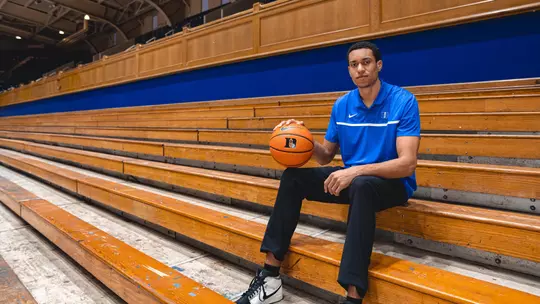
Robinson Thriving in New Coaching Role at Duke
David Shumate, GoDuke The Magazine
In this edition of GoDuke the Magazine, Voice of the Blue Devils David Shumate interviews Justin Robinson, former Blue Devil and current Director of Player Development. Their conversation explores Robinson's transition from player to coach and his impact on Duke Basketball's future.
David Shumate: So, I wanted start with what's it been like for you to be back on campus. Is it strange in a new role? How does it feel?
Justin Robinson: No, it's been amazing actually. Overall, it definitely has been an adjustment, it's been new, but I think that's fun. It's been fresh and exciting, but I mean, this is like a second home to me. The people who work here, the campus itself, it feels special to me, but obviously there's a lot of new people. The players are all new, I don't know any of the students anymore and I'm living downtown in Durham, which is new to me. So, I would just describe it as exciting and fresh.
DS: I'm going to get back to basketball in a second, but I’m curious, do you have some favorite spots downtown where you’re living now?
JR: Pizzeria Toro, that’s an easy favorite. I love that. But actually, I've been enjoying discovering all the new restaurants and stuff that has popped up downtown. It's grown so much.
DS: I know since you finished your playing career at Duke, you’ve been playing a little bit internationally. Tell me about that experience — what was that like playing overseas?
JR: It was fun. It was like a journey is the best way to put it. I went to Montenegro my first year, didn't know anything about Montenegro, and I lived there for 10 months straight and that was a crazy experience. You don't know anybody in the country before you step foot there, you're figuring out a new life and you're learning a new team just like you do every season with a new team, new system.
There's a lot to learn but it was really fun, and then Israel was a beautiful country. I lived right off the beach, so that was amazing and the basketball there is exciting. It's fun — I loved my teams out there and overall. It was a good experience.
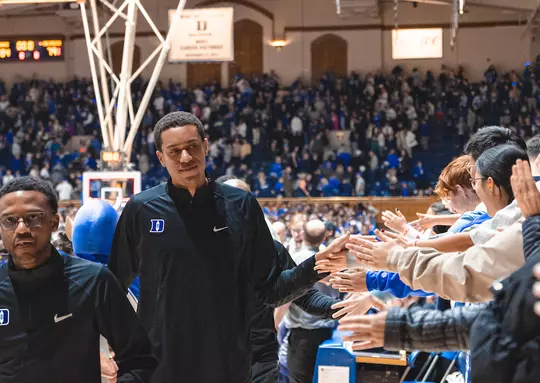
DS: I know what happened in Israel in the fall and what is going on there now in some ways sped up this process a little bit, but how many conversations had you had with Coach Scheyer over the years about potentially getting into coaching one day?
JR: Honestly, it was never my idea. I never thought about it as like a potential option. But Coach K and Coach Scheyer had mentioned to me at times that I should consider it. They said it would be after I'm done playing of course, but they definitely had told me that I should consider it and a couple of my teammates had told me that I should consider it. So, it was something that was always in the back of my mind.
But it's certainly worked out and I've actually really enjoyed it, I didn't know what to expect, and I've enjoyed it a lot.
DS: And obviously it's an opportunity that you had to commit to want to be a part of. What kind of sealed the deal for you in saying, you know what, I'm going give this a shot?
JR: I think it was the people. I have a great relationship with Coach Scheyer, and I think it was the fact that it was him asking me and the fact that it was here, that was what sealed the deal. I didn't really know what to expect when it came to coaching at this point in my career. I was still thinking about maybe going straight back to play just to a different team in a different country, so there was a lot up in the air. For me, working with people like this, working with Coach Scheyer, that was the main draw and that's lived up to all expectations for sure.
DS: Obviously, you were here as a player when he was an assistant coach on staff. Now he's the head coach and you’re working for him — how has that relationship changed? Is that different at all for you?
JR: (laughing) Actually no, he is the same person, which is pretty awesome. That's been kind of fun to see. He still has fun, we still play pick-up, we still work out, we still play shooting games and stuff. He’s really just the same guy. He obviously has new responsibilities, a new role, but it's the same guy, same family man he’s always been. Just fun loving, messing around, there’s a lot of banter around the coach's office. It's a fun environment.
DS: All the guys who have been on staff here that I've talked to over the years, whether it's Coach Carrawell, Coach Avery and obviously Coach Scheyer, they all have said when they were playing, they were like, “I don't really know what the coaches do” and that sort of stuff. Then when they started coaching, they got a true feel for the hours that are involved. Same story for you?
JR: Absolutely. I think that's the only way to describe it. They put a lot of preparation in when you're a player. But man, if I knew how much detail the coaches discuss, and how much film they watch, I would've paid a lot more attention and I would've taken a lot more notes in film rooms when they were telling me things because the preparation is in incredible. I mean, that’s why Coach K was so great and that's why Coach Scheyer and this staff are so great.
The amount of preparation they've put in is admirable, it's awesome.
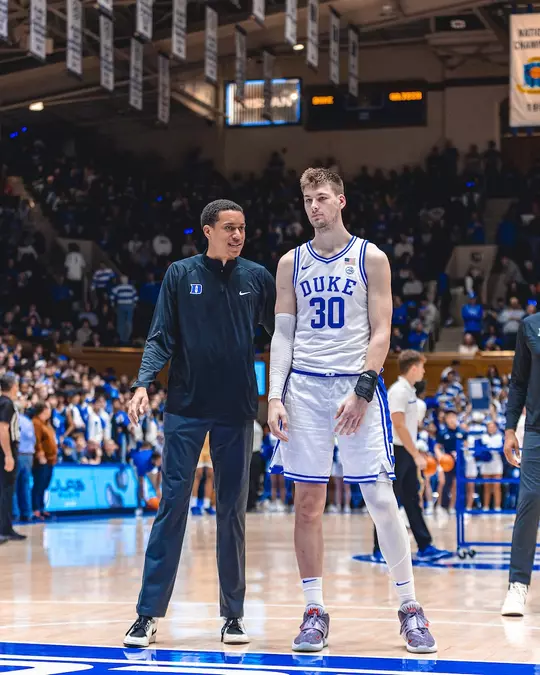
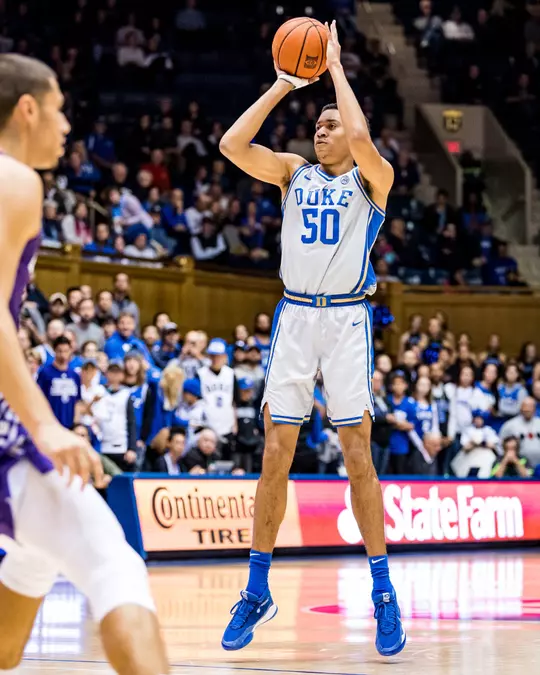
DS: As you're getting into it, what is your favorite part of coaching so far? Is it the work with the guys? Is it that prep, that film work? What stands out for you so far?
JR: A hundred percent, working with the guys. That's the part that comes natural to me. That's the part that as a player I did anyway — talking to guys one-on-one, how can that guy fit in with his skillset, with his body? How can he fit into the system and how can he make improvements and make adjustments within coach's system? That's my favorite part, talking that through with guys during a game or during a practice. That's the most rewarding to me.
DS: The player development side of things, obviously, you do a lot of work with the guys after practice. But I’m curious if those discussions bleed over into the game? Do you have any of those moments where you’re like, “Hey, this is something we're working on after practice, this move will work against this guy you're playing against right now?”
JR: I try not to talk as much during a game with those guys. The only time I'll really talk to them is when I'll pull a guy aside during a time out or something if I think what I can tell them will immediately affect us winning that game. If it's something else where it's maybe more like personal development in their game, like moves that you can use, I would take a note and then show them the next day when we come back for practice, when we're doing feedback. I would show them maybe the clip or talk through the game with them and we can evaluate their moves and build from there. But during the game, I want all the focus on winning the game, whatever it takes.
DS: I’ve asked coaches this over the years, and it feels like the answer's always unanimous, but I'm curious what your answer will be. Is it more stressful when you're out there playing in a game or when you're on the bench coaching and don't really have the control of being out on the floor?
JR: (laughing) It’s when you're on the sideline. It's harder to watch. Yeah, because, you don't have any control. You have to trust them, and that can be stressful for sure. But, it's fun to watch them play, it's fun to watch them grow and I think even though it's stressful, it's still very fun in its own way.
DS: Coaching anywhere is special, developing guys and everything that comes with it. But to do it where you went to school, where you played and had some incredible moments yourself — how cool is that? Not just developing guys, but doing it here.
JR: It's the best. Like I said earlier, this is my second home. This place we’re sitting in, Cameron, is special to me. To just be back and to be in this environment and to be hearing the Crazies and all the traditions, whether it's their chants or “Every Time We Touch” before the game, it's just incredible to be back and be a part of that. All the memories you have in here and even on the road, it's just nice to be living around that again.
This interview originally appeared in the 15.6 issue of GoDuke The Magazine – January 2024. Dedicated to sharing the stories of Duke student-athletes, present and past, GoDuke The Magazine is published for Duke Athletics by LEARFIELD with editorial offices at 3100 Tower Blvd., Suite 404, Durham, NC 27707. To subscribe, join the Iron Dukes or call 336-831-0767.